Meaning and making
Claddagh ring meaning and how to wear
What the heart, crown and hands stand for, which hand to wear it on, where the ring comes from and how to make your own in Dublin.
Book your place at the bench ↗Quick answer
The Claddagh ring is a classic Irish ring in which two hands hold a crowned heart: the heart stands for love, the crown for loyalty and the hands for friendship. It comes from Claddagh, a former fishing village in Galway, and is worn as a friendship, engagement or wedding ring. In Dublin you can make your own sterling silver Claddagh in a two-hour class.
What the ring says
| Part | Meaning |
|---|---|
| Heart | Love |
| Crown | Loyalty |
| Two clasped hands | Friendship |
| Right hand, heart out | Single |
| Left hand, heart in | Married |
What the Claddagh ring means
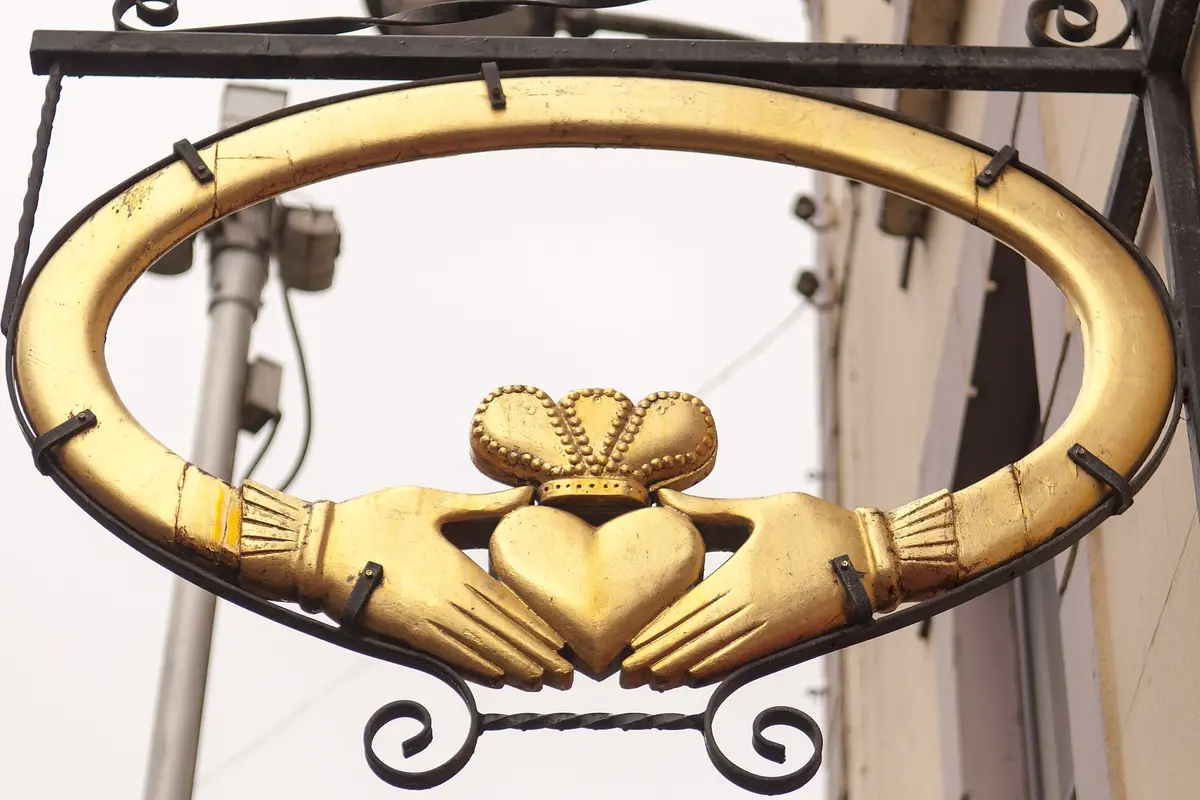
The Claddagh ring, called fáinne an Chladaigh in Irish, has three main features: a heart, a crown and two clasped hands. The heart represents love, the crown represents loyalty and the hands represent friendship. Together they make a short message you can wear, which is why the ring works so well as a gift for a partner, a friend or a family member. It is also a well-known emblem of Irish identity. People wear it as a friendship ring, an engagement ring or a wedding ring, and the design is instantly recognisable.
Where it comes from
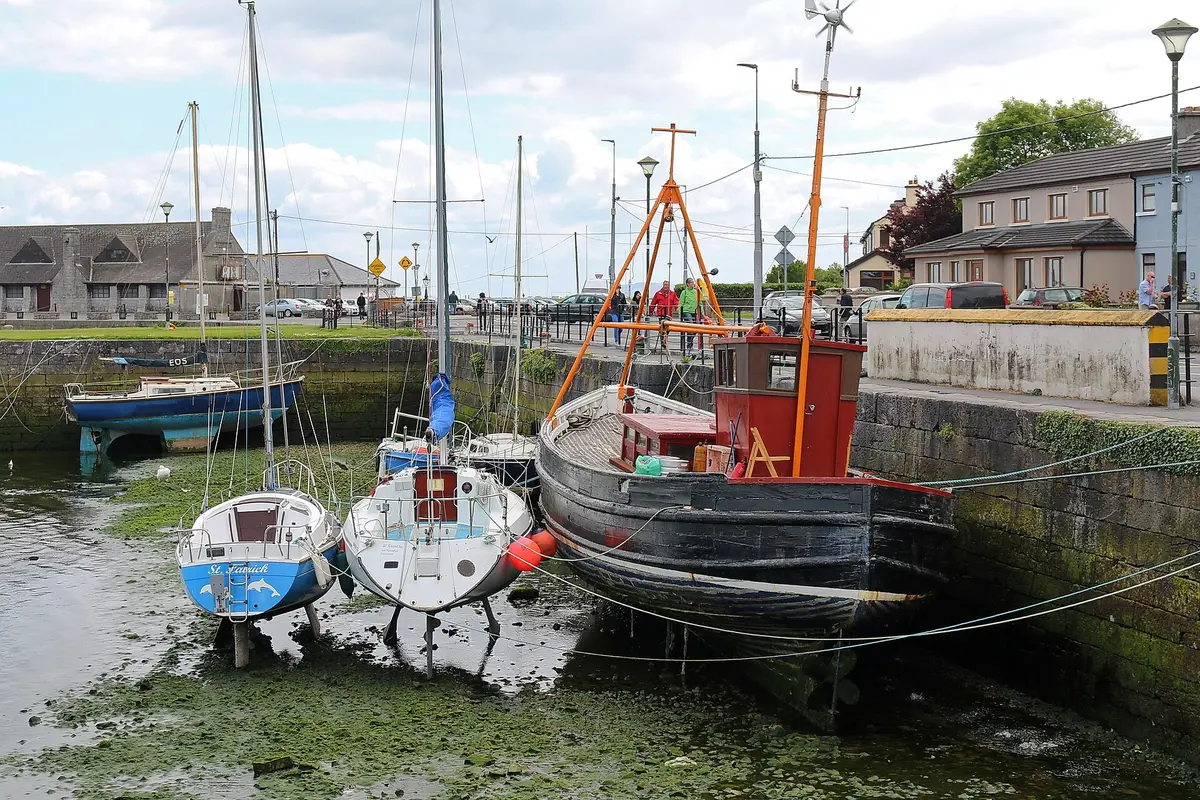
The Claddagh is an area close to the centre of Galway, where the River Corrib meets Galway Bay. It was formerly a fishing village just outside the old city walls, and its name comes from the Irish An Cladach, meaning the seashore. The design and customs of the ring originated here. Galway has produced Claddagh rings continuously since at least 1700, although the name Claddagh ring was not used before the 1830s. The ring spread across Ireland and Britain in the Victorian period, and Galway jewellers began to sell it further afield in the 19th century.
The legend of Richard Joyce
Many stories explain the ring, and the best known names Richard Joyce, a Galway silversmith around 1700. In the legend, Joyce was captured by Algerian corsairs on a sea voyage and sold to a goldsmith who taught him the craft. When he was freed he returned to Galway with a ring he had made, gave it to his sweetheart and went on to a successful career as a goldsmith. His initials appear on one of the earliest surviving Claddagh rings. It is a lovely story, and it is worth enjoying as one: it is a legend, and the early history of the design is still debated, which only adds to its charm.
The oldest rings and an older idea
The oldest surviving Claddagh rings are credited to the goldsmith Bartholomew Fallon. The design also belongs to a wider family of European finger rings called fede rings. The name comes from the Italian mani in fede, meaning hands joined in faith or loyalty. The clasped-hands gesture goes back to Ancient Rome, where it meant pledging vows, and fede rings were used as engagement and wedding rings in medieval and Renaissance Europe. The Claddagh adds a heart, and usually a crown, to that old idea.
Which hand and which way
A popular custom says the way you wear the ring tells people about your love life. It is a charming tradition, and it is good to know it before you choose how to wear yours. According to Irish author Colin Murphy, the traditional meanings are as follows. These customs come from oral tradition, not ancient writings, so there is room for local variations. Whichever way you choose, the ring is yours to wear as you like, and that is part of the fun of wearing a tradition with such a flexible grammar.
- Right hand, heart pointing to the fingertips: single and perhaps looking for love
- Right hand, heart pointing to the wrist: in a relationship
- Left ring finger, heart pointing to the fingertips: engaged
- Left ring finger, heart pointing to the wrist: married
Friendship, engagement or wedding
Claddagh rings are sometimes given as friendship rings, but they are most commonly used as engagement and wedding rings. Mothers sometimes give them to their daughters when they come of age, and in Ireland and the Irish diaspora the ring is sometimes handed down from mother to eldest daughter or from grandmother to granddaughter. Several mottos go with it, such as Let love and friendship reign, which sums up the ring neatly. A version called the Fenian Claddagh leaves off the crown, but the crowned design is the more popular one.
The ring today
In recent years the design has been embellished with interlace patterns and combined with other Celtic and Irish symbols, which fits its popularity as an emblem of Irish identity. Claddagh rings are worn by many people of Irish heritage, including Irish Americans. They have also had famous admirers: John F. Kennedy and his wife received theirs on a trip to Galway in 1963, and British royalty were seen wearing the ring after travelling to Ireland in 1849. A ring with that much history makes a strong souvenir.
Make your own in Dublin
In Dublin you can make a Claddagh ring in a two-hour class taught by Silver Works goldsmiths. You start from a Claddagh ring strip, pierce the marked silver with a jeweller's saw, form the ring with pliers and a ring mandrel, then file it and add texture if you wish. The tutor demonstrates the soldering, and the ring is polished on a professional polishing motor, in a matte or shiny finish. The class meets at George's Street, and you take home a made-to-measure sterling silver Claddagh. To compare it with the plain silver ring class, read our guide to choosing.
Read next: Silver or Claddagh ring: Dublin class
What your ring is made of
The ring you make is sterling silver, an alloy of 92.5% silver by weight with the remainder usually copper. That composition is called a minimum fineness of 925, and it is the standard grade for silver jewellery. Sterling silver is a long-established jewellery metal, so it suits a ring you may want to wear for years. If you like the tools and the metal as much as the symbol, our note on sterling silver and the tools on your bench goes into more detail.
Read next: Sterling silver and the tools on your bench
A ring to give, or to keep
A handmade Claddagh is a thoughtful gift because the meaning and the making come together. You could make one for a partner, a friend or a daughter, or keep it yourself as a memory of your Dublin trip. If you want to give the class rather than the ring, Silver Works sells vouchers on its own website, so the person you give it to can choose their own date. For a visit to the place where the design began, the Claddagh area in Galway is where the River Corrib meets the bay.
Who this isn't for
The Dublin class is taught in studios up steep stairs with no lift, so it is not suitable for wheelchair users or for people with impaired mobility. Children under 10 can't take part, and guests aged 10 to 15 come with a participating adult. If those rules don't fit your group, the history in this guide is still yours to enjoy, and a ready-made ring from a jeweller is an easy alternative.
Frequently asked questions
What does the Claddagh ring mean?
The heart means love, the crown means loyalty and the two clasped hands mean friendship. Together they make a traditional Irish symbol of love, loyalty and friendship.
Which hand do I wear a Claddagh ring on?
By custom, the right hand means single or in a relationship, and the left ring finger means engaged or married. Heart pointing to the fingertips means available or engaged, and pointing to the wrist means taken or married.
Where does the Claddagh ring come from?
It comes from Claddagh, a former fishing village in Galway, Ireland. Galway has made Claddagh rings continuously since at least 1700, and the name Claddagh ring appeared in the 1830s.
Can I use a Claddagh ring as an engagement or wedding ring?
Yes. Claddagh rings are used as friendship rings, but they are most commonly used as engagement and wedding rings, in Ireland and among people of Irish heritage.
Can I make a Claddagh ring in Dublin?
Yes. Silver Works teaches a two-hour Claddagh ring workshop in Dublin, where you turn a Claddagh ring strip into a made-to-measure sterling silver ring and keep it.
What is a Fenian Claddagh ring?
It is a Claddagh ring without a crown. It is a slightly different take on the design, but it is less popular than the crowned version.
Sources